
Mastering the Art of Writing Forwardable Email Introductions
Building meaningful connections is one of the keys to success. One of the most effective tools for creating new connections and opening doors in your professional journey is the email introduction. Whether you’re a startup founder seeking partnerships, a salesperson looking to build relationships, or a jobseeker aiming to expand your network, the ability to craft effective email introductions can open doors and create valuable opportunities for conversation, feedback, and exploration.
In this guide, I’ll explore how to write effective forwardable email introductions that summarize your request and your value.
Preparing your Network
Before going further, keep in mind this guide contemplates that you already have a pre-existing relationship with the person you’ll be asking to make the introduction. As a best practice, this person should already have a shared understanding of your current professional goals so the receipt of an introduction request is not a surprise.
If it’s been several years since you’ve worked with this person, or shared a conversation virtually (perhaps via LinkedIn or another professional community), please consider setting aside time to catch up, grab a coffee together, or send a brief note summarizing your current situation. Ask if they’re willing to help you BEFORE sending your forwardable email. I’ll discuss strategies and tips for building and maintaining your professional network another time.
1. Power of Forwardable Introductions
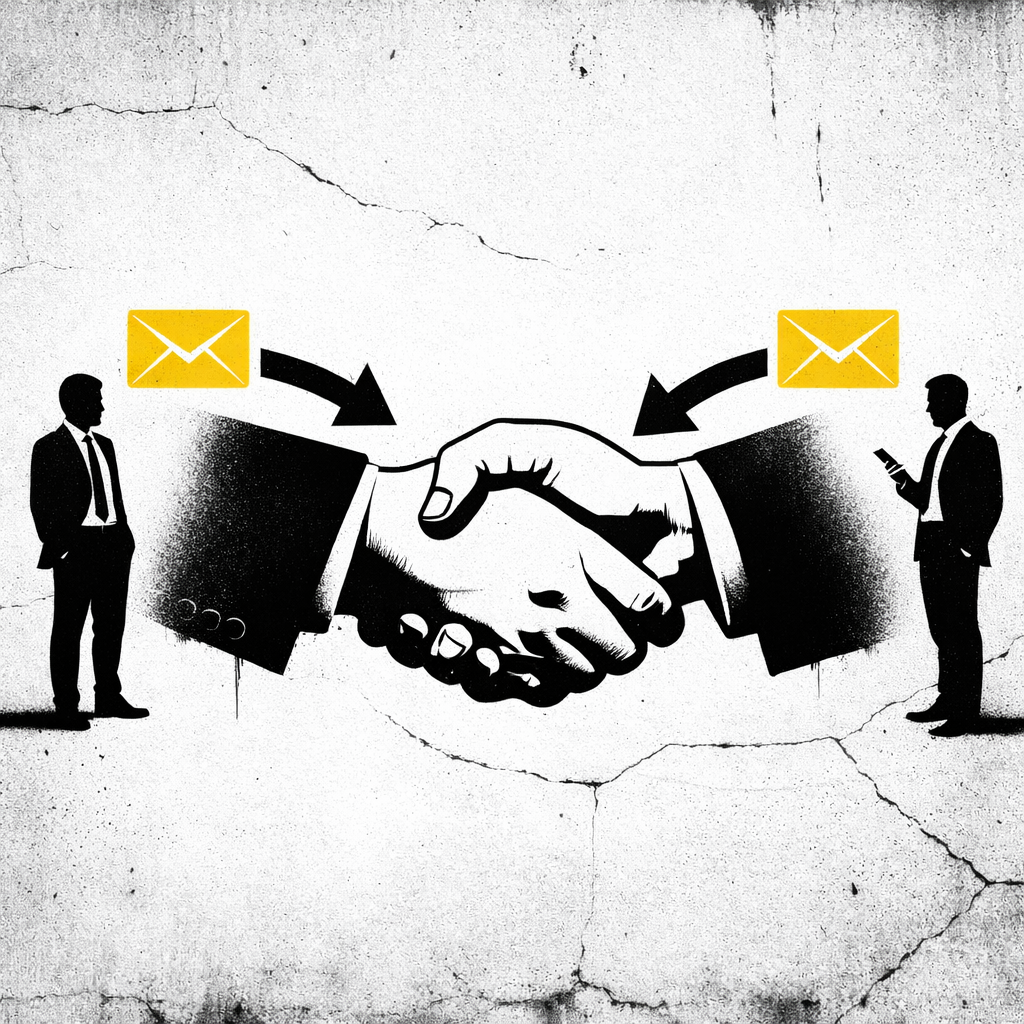
Forwardable email introductions are those that recipients feel comfortable forwarding to others. They’re concise, compelling, and make it easy for the connector, ‘the introducer,’ to introduce you to someone else, ‘the recipient.’
By mastering this skill, you increase the likelihood of your message reaching the intended audience and making a lasting impression on both parties.
2. Start with a Strong Subject Line
The subject line is the gateway to your email, so make it count. Keep it clear, concise, and relevant to both the introducer and your intended recipient downstream. A subject line that grabs attention without being overly salesy or insincere sets the tone for the introduction. Without reading beyond the subject line, the introducer should immediately be clear on your request.
3. Personalize Your Introduction
Personalize your introduction before diving into the body of your email. Address the recipient by name and briefly mention any common connections, shared interests, or goals you may have. This shows that you’ve taken the time to research and tailor your message, making it more likely to resonate with the recipient.
4. State Your Purpose Clearly
Be upfront about why you’re reaching out and what you hope to achieve. Whether you’re seeking advice, partnership opportunities, exploring job opportunities, or simply looking to connect, clarity is key. Avoid vague language or ambiguous requests that may confuse the recipient. While brevity and clarity are appropriate for writing to professionals at any level in their career, this is especially important if your recipient is an executive.
5. Emphasize Your Value Proposition
In a few concise sentences, articulate your value or what sets you apart, and why the recipient should be interested in connecting with you. What unique skills, experiences, or insights do you bring to the table? Focus on the value you can provide and how it aligns with the recipient’s interests or objectives. Even better if you can quantify your value within the context of your recipient’s key objectives.
6. Make It Easy for the Introducer to Forward
The ultimate goal of a forwardable email introduction is to make it effortless for the recipient to forward your message to someone else. Provide clear instructions on who you’d like to be introduced to and why, making it as simple as possible for the introducer to take action.
7. Express Gratitude
Close your email with a polite expression of gratitude for the introducer’s time and consideration. Even if they’re unable to assist you directly, maintaining a professional, grateful, and respectful tone leaves a positive impression and keeps the lines of communication open for future opportunities.
Examples of Forwardable Email Introductions
#1 Startup founder or executive asking for an introduction to an investor
Subject: Introduction request to [Recipient’s Name] – [Company Name + Brief Description]
Hi Shaun,
I hope this email finds you well. I’m reaching out because I’m interested in connecting with [INVESTOR] from XYZ Ventures. I noticed their involvement with Clever, a platform dedicated to enhancing digital learning experiences for students, teachers, and schools. I love the mission and it resonated with our mission at ACME.
ACME is a children’s education tech company. We use voice recognition and AI to help kids learn to read, while also boosting confidence in parents guiding their learning.
Highlights:
- Revenue YTD, % increase YoY, projected revenue in 2024
- Subscribers
- Boostrapped to $500k ARR, closed $2.5M Seed in 2023
- Current Raise: $XM at $YYM valuation
ACME is collaborating with multiple school districts to bring our cutting-edge reading platform to students across the nation.
Thanks again for your help in facilitating an introduction.
From here the introducer can quickly add a couple of lines to the top of the message about their relationship or experience with this person before forwarding the message to the recipient.
#2 Jobseeker requesting an introduction to an executive or hiring manager
Subject: Introduction request to [Recipient’s Name] <> [Requester’s Name, Role + Impact]
Hi [Introducer’s Name]
I noticed you’re connected to John Smith, the CRO at ACME.
They’re based nearby in San Francisco and I just learned that John is recruiting for a VP of Customer Success role. I don’t want to assume he’ll see the message I sent via LinkedIn or my application and I would appreciate the additional visibility.
Do you know him well enough to share my name or connect us for a conversation?
Thanks again for your support!
[Message to John below]
Hi John,
I would love to speak with you regarding the VP Customer Success role at ACME.
I’m a builder at heart and a hands-on leader who has been through the early stage start-up-to-scale journey several times, including as a founder. Most recently I have built and led Customer Success teams for _________________
I enjoy studying, creating, and working with systems for improving knowledge management and optimizing how we spend our time in the workforce. I’m interested in early-stage teams innovating in AI and believe that ACME possesses a unique technological edge and the opportunity to collaborate with an exceptional team that values creativity and integrity.
I’ve worked extensively with F500 enterprises throughout my career, building teams from the ground up to 25 people while scaling revenue from X to Y. I enjoy developing people, contributing to great products, and implementing efficient systems to deliver value, drive advocacy, and create predictable revenue retention for early-stage startups.
I look forward to learning more about the platform you’re building and discussing how we can work together to create a world-class, data-driven experience that will ensure ACME’s customers effectively realize value and thrive for years to come.
Here’s my current availability over the next few days or I am happy to do my best to accommodate if you would prefer to share your calendar.
Again, from here the introducer can quickly add a couple of lines to the top of the message about their relationship or experience with this person before forwarding the message to the recipient.
______________________
#3 Requesting an introduction to an executive or founder. In this example, you’ve already received a thumbs from the introducer and just need to compose the message.
Subject: Introduction request to [Recipient’s Name] <> [Requester’s Name, Current Role]
Hi [Introducer’s Name] Thanks again for offering to introduce me to John.
Best,
[Message to John below]
Hi John,
I enjoyed hearing the back story of XYZ Startup and the pivot to ______________ and would love to speak with you regarding the VP Customer Success role.
As I listened to your talk on last week’s podcast I couldn’t help but think about the post-sales use cases to help Customer Success Managers drive renewals, uncover expansion opportunities, conduct stakeholder discovery, accelerate onboarding/implementation, diagnose and mitigate risk.
Upskilling, coaching, and reinforcement learning are too often deprioritized as a result of the high cost of providing personalized hands-on coaching and the opportunity cost of regularly pulling Sales and Customer Success away from customer-facing selling and value realization activities. I believe XYZ is positioned to change that.
A bit about me — I’ve been through the startup-to-scale journey multiple times as a Customer Success leader, founder, and sales leader. Most recently I built and led Customer Success teams for ________ scaling revenue from X to Y while improving retention ZZ% YoY. I’m a builder at heart, enjoy working in early-stage startups, and am deeply interested in exploring the potential that AI brings to enterprise-focused applications for Sales, Marketing, and Customer Experience.
Here’s my availability over the next few days or I am happy to do my best to accommodate if you would prefer to share your calendar.
Once again, from here the introducer can quickly add a couple of lines to the top of the message about their relationship or experience with this person before forwarding the message to the recipient.
_______________________
Final Thoughts
Mastering the art of writing forwardable email introductions is a valuable skill that can open doors and create opportunities in your professional journey. By following these tips and guidelines, you can craft impactful introductions that resonate with recipients and pave the way for meaningful connection, conversation, and collaboration.
Remember to keep it professional, concise, and considerate, and watch as your network expands and your opportunities grow.